

The global real estate landscape has seen a profound transformation in the wake of the COVID-19 pandemic, a period of unprecedented uncertainty that rapidly evolved into a catalyst for change, accelerating pre-existing trends and forging new ways of navigating dynamic post-pandemic market conditions. From my experience observing local developments, it’s clear that success now requires a comprehensive understanding of the forces shaping supply, demand and investment strategies. There has been a clear redefinition of living and working spaces, with accelerated adoption of technology pushing stakeholders across segments of the industry to adapt to evolving paradigms and thrive. This dramatic reevaluation of the use and value of the built environment and commercial spaces reflects what David Smith Head of Americas Insights once hinted—that some changes reverted to pre-2020 norms but many became permanent fixtures in how we live, work and play long term.
Table of Contents
The retail property sector encompasses a variety of formats from retail stores in city centres to shopping streets nearby and these differ depending on the sectors they serve, whether dedicated to high-end brands or intended for everyday shopping. In practice I’ve seen how city centres offer a variety of commercial spaces ranging from large shopping malls to small boutiques. These shopping centres, true urban attractions, combine retail stores with complementary services such as restaurants, cinemas, gyms and institutions. However the decline in department store popularity has left many large spaces vacant while large-scale retailers such as furniture stores, electronics stores and supermarkets are shifting toward the outskirts of towns in dedicated retail areas and retail parks. The global retail sector faced unprecedented challenges at the onset of the pandemic which triggered store closures, a sharp decline in foot traffic and a rapid rise in e-commerce where consumers’ shopping habits drastically changed.
As the economy recovers the retail property market’s opportunities and challenges in the post-pandemic era have become more visible. Today retail properties must adapt to evolving market demands and both investors and property owners are responding strategically. In this blog I explore this recovery examining opportunities and potential challenges. I’ve noticed increasing concerns that city centre retail spaces may become obsolete especially in places like the United Kingdom and South Korea where research suggests that cities in advanced economies have too much retail space and insufficient demand. As a result retailers face high vacancy rates. Many city centres have struggled in recent years to attract sufficient visitors to remain economically sustainable reshaping investment thinking.
The growth of e-commerce and online shopping further accelerated during the COVID-19 pandemic has reduced the need for shoppers to visit physical retail centres. Pre-pandemic data showed that 24% of total retail sales in South Korea and 19% in the United Kingdom took place online and reports like Savills (2020) suggest that the issue of redundant retail space is likely to worsen. Over the five years following the COVID-19 pandemic the office market has undergone a profound transformation significantly influencing construction and real estate development. The pandemic-induced shift to remote and hybrid work models led to a reevaluation of traditional office spaces increased vacancies declining property values and a surge in adaptive-reuse projects. This evolution has prompted developers and city planners to rethink urban landscapes focusing on flexibility sustainability and mixed-use developments.
In recent years the commercial real estate sector particularly retail has undergone a significant transformation. Once perceived as nearing extinction brick-and-mortar retail spaces have evolved adapting to new challenges and opportunities driven by the rise of e-commerce changing consumer preferences and the acceleration caused by the COVID-19 pandemic. This blog explores how the sector is adapting and what the future holds focusing on innovations and strategies employed by companies like Springboard.
The Remote Work Revolution and Suburban/Rural Appeal
What felt like a rapid and widespread adoption of remote work didn’t just change routines—it fundamentally reshaped housing preferences and geographical demand. I’ve personally seen how millions of professionals, once tied to rigid schedules, are no longer tethered to physical office locations. They began to re-evaluate their living situations, and that sense of freedom spurred a significant migration away from dense urban centers. Those smaller, often more expensive apartments that once seemed practical suddenly offered limited space, especially without dedicated home offices or outdoor amenities. People started looking towards areas offering greater value and an improved quality of life, and you could feel that shift even in everyday conversations.
As a result, suburban and rural markets experienced an unprecedented surge in demand, driving property values and rental rates up in previously quieter locales. Many buyers sought larger homes, dedicated workspaces, bigger backyards, and easy access to nature, clearly prioritizing space and comfort over close proximity to city amenities. This shift has created a more geographically dispersed demand for housing, quietly impacting infrastructure needs and community planning beyond traditional metropolitan boundaries—something that, in my experience, many developers are still trying to catch up with.
The Post-Pandemic Landscape: Changing Consumer Preferences
A Shift in How People Shop and Live
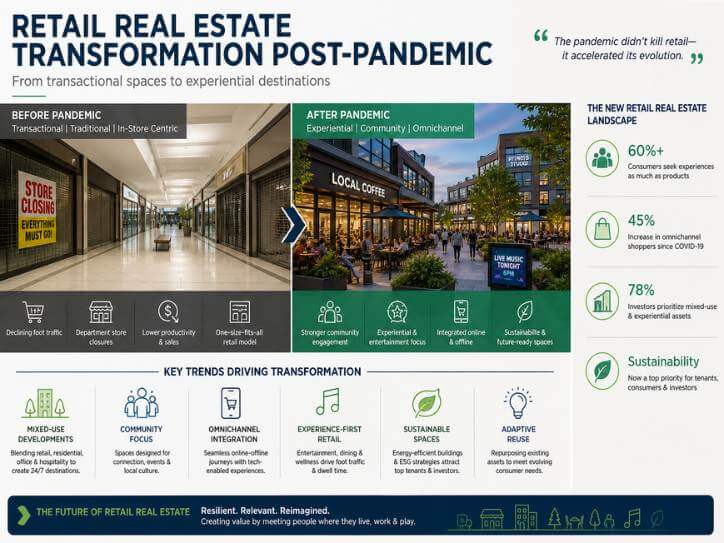
The The post-pandemic, landscape, changing, consumer, preferences shows how important it is to pause and understand behavior before building anything new. Before delving into specifics like mixed-use developments, it’s clear that the pandemic forced people to stay home, creating a boom in e-commerce where consumers turned to online shopping for their needs. This caused a shift marked by a major decline in foot traffic across traditional retail stores, enclosed malls, and standalone locations—something I personally noticed when even the busiest streets started feeling unusually quiet.
As restrictions eased, people gradually returned to in-person activities, but not in the same way as before. The demand for experiential shopping and community-focused spaces grew, reflecting a deeper change in priorities. Today, shoppers prioritize not just products bought, but the experience and convenience surrounding the purchase. This change in behavior has driven demand for spaces that provide a variety of services and amenities, naturally blurring the lines between retail, living, working, and leisure activities.
From my experience observing new retail projects, the most successful ones are those that quietly adapt to this reality—designing places where daily life flows easily, rather than forcing people into outdated shopping patterns.
The Rise of Mixed-Use Developments
The The rise of mixed-use developments reflects how modern spaces now combine retail, residential, hospitality, and office functions, and have emerged as the answer to evolving needs in a post-pandemic world. These spaces are carefully designed to foster a sense of community while providing convenience through multiple services under one roof. In reality, they feel less like commercial projects and more like lifestyle hubs. What makes mixed-use properties resilient to market shifts is how they offer key benefits, attracting both developers and consumers alike. Even when one sector slows down, others support the ecosystem, making them a smarter long-term strategy.
Integration of Retail with Residential Spaces
The The integration of retail and residential spaces is one of the most notable trends in retail real estate post-pandemic. Today, people are increasingly looking to seek convenience and sustainability, wanting shops, restaurants, and services within walking distance of their homes, which is an attractive proposition. I’ve noticed that areas with nearby grocery stores and cafés feel more alive and in demand. Developers are taking advantage of this shift, creating vibrant communities where retail spaces serve as hubs for residents and visitors. In dense urban areas, where housing is in high demand, these mixed-use developments offer a blend of affordable housing options and high-end amenities, allowing people to live, shop, work, and socialize in close proximity. This is especially appealing to younger generations, including millennials and Gen Z, who prioritize convenience, sustainability, and flexible lifestyles, making such projects highly desirable.
Retail Spaces as Community Hubs
Modern retail spaces within mixed-use developments have evolved from merely transactional environments into true community hubs where people engage in social activities and shared experiences. Instead of just selling products, they now host events, art installations, food markets, and wellness programs, all designed to serve as gathering places, fostering a sense of connection and community. I’ve personally seen weekend markets draw more crowds than traditional stores. These urban mixed-use developments, incorporating public spaces like parks, plazas, and walking paths, actively encourage people to linger, socialize, and shop. This shift has transformed retail spaces from simple stores into multi-functional environments, where people attract people, and spend time in the area—completing a purchase and leaving is no longer the goal; staying longer is.
Hospitality and Retail Synergy
The The integration of hospitality and retail spaces is an emerging trend where hotels are combined with retail and dining options, creating a dynamic experience for visitors. These hotels in mixed-use developments are no longer just places to sleep, but offer guests an immersive experience through curated retail offerings, local dining experiences, and convenient access to entertainment and leisure activities. This creates a vibrant atmosphere that cater to the needs of travelers, allowing them to experience local culture in an accessible and integrated way.
Office Spaces and Retail Coexistence
The The pandemic accelerated the rise of remote work, prompting companies to reassess the need for traditional office spaces. As a result, mixed-use developments now incorporate office spaces alongside retail, residential, and hospitality elements, which provides businesses the flexibility to set up operations in prime locations while enjoying the convenience of amenities surrounding retail spaces. By integrating office spaces with retail in a mixed-use setting, businesses benefit from foot traffic generated by retail components.
Sustainability and Green Building Practices
The focus on sustainability, green building practices post-pandemic has grown as consumers are increasingly focused on sustainability. Developers are now ensuring mixed-use developments incorporate eco-friendly building practices and designs, prioritizing energy-efficient features, green roofs, public transit accessibility, and sustainable building materials to create environmentally responsible developments. This sustainability aspect appeals to eco-conscious residents, businesses, and shoppers who want to minimize their environmental impact.
The inclusion of green spaces is a key component of mixed-use developments, as it not only provides a pleasant aesthetic but also contributing to mental well-being, offering residents and workers places to relax and connect with nature. These features are proving highly desirable for individuals looking for balanced, environmentally responsible living and working conditions.
The Remote Work Revolution and Suburban/Rural Appeal
The rapid and widespread adoption of remote work has fundamentally reshaped housing preferences and geographical demand in ways many didn’t expect. I’ve seen how millions of professionals are no longer tethered to physical office locations, and they have began to re-evaluate their living situations. This new freedom has spurred a significant migration away from dense urban centers, where smaller, more expensive apartments often offered limited space. The lack of dedicated home offices and outdoor amenities pushed people towards areas offering greater value and an improved quality of life.
Digital Transformation and PropTech Adoption
The pandemic acted as a powerful accelerator for digital transformation in the real estate sector. With physical showings and in-person meetings restricted, the industry rapidly embraced PropTech solutions to maintain operational continuity. Tools like virtual tours, 3D renderings, drone photography, and interactive floor plans became essential for showcasing properties, allowing potential buyers and tenants to explore spaces remotely and safely. I remember how quickly agents shifted—what once felt optional suddenly became the only way forward.
Evolving Investment Strategies and Asset Classes
The investor focus has significantly recalibrated in the post-pandemic environment, necessitating a shift from traditional investment strategies. The future of conventional office spaces remains subject to ongoing debate, leading investors to re-evaluate their exposure to this asset class. On the other hand, the exponential growth of e-commerce, fueled by stay-at-home mandates, has spurred a boom in demand for industrial and logistics properties, including warehouses and distribution centers, making them highly attractive investments.
Supply Chain Disruptions and Construction Costs
The global pandemic exposed and exacerbated vulnerabilities in global supply chains, profoundly impacting the construction industry. Lockdowns, labor shortages, and factory closures led to significant disruptions in the production and transportation of essential building materials. Commodities like lumber, steel, and concrete components experienced unprecedented price volatility and extended lead times, creating substantial headwinds for developers and homebuilders.
Sustainability and Wellness as Key Differentiators
An intensified focus on health, wellness, and environmental sustainability has emerged as a critical trend shaping property development and tenant demands. The pandemic highlighted the importance of healthy indoor environments, leading to increased demand for properties with advanced air filtration systems, ample natural light, and better access to green spaces. Both residential and commercial tenants are now prioritizing buildings that contribute to overall well-being.
Retail real estate: a struggling market
The retail real estate sector is a struggling market, as the retail sector has been going through a prolonged crisis, made worse by the rise of e-commerce. This has been putting constant pressure on physical stores, forcing retailers to need to adopt omnichannel strategies to meet new expectations of consumers, who are increasingly favouring online shopping.
The effects of the pandemic on the retail real estate market
The effects of the pandemic on the retail real estate market have been far-reaching. The COVID-19 pandemic accelerated many changes, as physical stores had to close their doors and online shopping exploded. After the end of lockdowns, retailers hoped for a quick recovery, but the war and Russia-Ukraine War, along with the energy crisis and inflation, have continued to limit sector revenues. This has led to the permanent closure of many stores, including large chains.
Market developments: adapting to new challenges
Recent market developments show how the sector is adapting to new challenges during turbulent times. In 2023, there was a rebound in the volume of retail space leased in city centres, reaching 540,000 m², a figure higher than previous years. Still, the market remains challenging, with investment in retail properties falling to €5.4 billion in 2023, down from €9 billion in 2022.
Post-Pandemic Recovery of Retail Properties: Opportunities and Challenges
The global global, retail, sector faced unprecedented, challenges at the onset of the pandemic, including store closures, a sharp decline in foot traffic, and a rapid rise in e-commerce. Consumers shopping habits were drastically changed, and even as the economy recovers, the retail property market is only beginning to see new opportunities alongside ongoing challenges. In this post-pandemic era, retail properties must adapt to evolving market demands, and both investors and property owners are forced to respond more strategically. This discussion explores that recovery by examining both the opportunities and potential challenges.
The Revival of Experiential Retail
The pandemic accelerated the growth of e-commerce, and during lockdowns, demand for in-person shopping experiences almost disappeared due to social distancing measures. As these restrictions ease, experiential retail is making a gradual comeback, blending shopping, purchasing goods, socializing, entertainment, and cultural experiences. Retailers are now focusing on creating unique in-store experiences through interactive displays, pop-up stores, and DIY workshops to attract customers back to physical locations.
The Blending of E-commerce and Brick-and-Mortar Stores
The pandemic pushed retailers to accelerate the integration of online and offline channels, adopting an omni-channel strategy where brick-and-mortar stores are no longer just points of sale but key parts of the brand experience. A major example is the buy online pick up store (BOPIS) model, which gained significant traction during the pandemic. Today, consumers expect this level of convenience as standard.
This shift has also increased demand for improved logistical facilities, including dedicated pick-up zones and package handling areas, helping retail property investors support the merging of online and offline operations. As a result, physical retail spaces are evolving into hybrid fulfillment and experience hubs rather than standalone stores.
Shift in Retail Formats
Post-pandemic, retailers are reevaluating their business models and market positioning, leading to a clear shift in retail formats. Large chain stores are downsizing, while smaller local brands and service-based concepts are gaining ground. Retail property owners are responding by becoming more agile, adjusting leasing strategies, and offering flexible lease terms to attract these emerging formats.
Focus on Sustainability and Health Standards
The pandemic increased awareness of health and safety concerns, pushing retail properties to meet higher standards. Moving forward, sustainability has become increasingly important, with green buildings and eco-friendly initiatives acting as major factors for attracting tenants and consumers. Retail property owners are enhancing appeal by incorporating environmentally conscious designs.
Ongoing Uncertainty: Challenges and Responses
Although the retail market shows signs of recovery, the future remains uncertain due to the pace of economic recovery, consumer confidence, and global supply chain issues. These factors continue to influence retail performance, making it essential for investors and property owners to remain flexible and alert to market changes.
The Evolution of Retail Spaces
Over the years, many analysts predicted the decline of physical retail, but instead, retail has undergone a major transformation. The rise of e-commerce and the COVID-19 pandemic forced brick-and-mortar stores to rethink strategies, leading to major retail closures and a surge in demand for logistics space. Companies significantly expanded fulfillment networks and shifted toward integrating online and offline experiences.
Retailers adopted a clicks-to-bricks approach, introducing models like buy-online-pickup-in-store (BOPIS) and curbside pickup. Malls and shopping centers began repurposing vacant spaces into warehouses, microdistribution centers, and even community hubs. Lease structures also evolved, with more flexible agreements and shared service models becoming common in response to economic pressure.
Technology also played a central role, with augmented reality (AR) and virtual reality (VR) improving customer engagement. Data analytics and smart building systems now help retailers optimize operations, improve energy efficiency, and enhance customer experience. These innovations are reshaping how retail spaces function in a digital-first world.
Conclusion
The pandemic dramatically altered the retail landscape, accelerating digital adoption, changing consumer behavior, and reshaping property strategies. As the market continues to evolve, mixed-use developments, experiential retail, and digital integration are becoming central to the future of retail real estate. While challenges like economic uncertainty and shifting demand persist, they also create new opportunities for innovation and growth. The future of retail property will depend on adaptability, sustainability, and the ability to deliver experiences rather than just transactions in an increasingly interconnected world.


Leave a Reply